safety

What to do if your car breaks down in heavy traffic

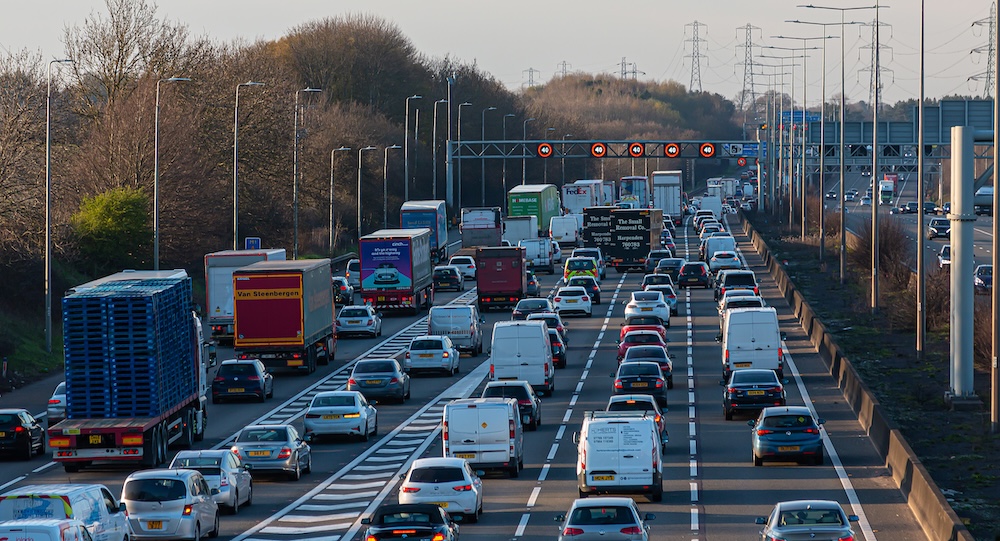
Cars queuing on a busy UK motorway

A car breakdown is stressful at the best of times. When it happens in heavy traffic, it can feel even more daunting because you’re dealing with other vehicles, limited space and potential safety risks.

Knowing what to do if your car breaks down in traffic can help protect you, your passengers and other road users while you arrange assistance.

If your car breaks down in heavy traffic, you should:

  • Switch on your hazard lights immediately
  • Try to move your vehicle as far left as is safe
  • Stop in the safest available location
  • Assess your surroundings before deciding whether to stay in or leave the vehicle
  • Contact your breakdown provider from a safe location
  • Call 999 if you or anyone else is in immediate danger

Are cars more likely to break down in heavy traffic?

While motorway driving can certainly put a strain on your car, it’s stop-start driving in heavy traffic that can cause the most damage.

Stop-start driving means your engine, cooling system, clutch and brakes are working constantly. At the same time, slower speeds reduce airflow through the radiator, making it harder for the engine to stay cool.

That’s why engine overheating is one of the most common causes of a breakdown in traffic. Problems such as a faulty cooling fan, radiator issue or damaged hose can become more noticeable when crawling through congestion.

What to do if you break down in traffic: step-by-step guide

1. Alert other drivers

As soon as you realise there’s a problem, switch on your hazard warning lights.

These help alert other road users that your vehicle is moving unusually slowly or has stopped unexpectedly. If visibility is poor because of rain, fog or darkness, keep your side lights on too.

2. Move to a safer position if possible

If your vehicle can still move, signal and carefully make your way towards the left-hand side of the road.

On a motorway, this may mean reaching the hard shoulder if one is available. On other roads, aim for the left-hand side or another safe location away from moving traffic.

Don’t make sudden manoeuvres or force your way across lanes. If traffic is stationary, wait for a safe opportunity to move.

3. Stop safely and secure the vehicle

Once you’ve stopped:

  • Apply the handbrake
  • Switch off the engine if appropriate
  • Keep your hazard lights on
  • Put the vehicle in gear or park, depending on the transmission

Take a moment to assess your surroundings before deciding what to do next.

4. Think carefully before leaving the vehicle

Whether you should stay in the vehicle or leave it depends on where you’ve broken down.

If you’re on a motorway hard shoulder and can safely get beyond a safety barrier, that may be the safest option.

However, if you’ve come to a stop in a live traffic lane or somewhere you cannot leave the vehicle safely, it may be safer to remain inside with your seatbelt fastened until help arrives or emergency services attend.

Always prioritise getting yourself and your passengers away from danger, but don’t put yourself at risk by stepping into moving traffic.

5. Stay aware of other hazards

Traffic jams can create additional risks.

Drivers and passengers sometimes leave their vehicles during long delays, while motorcyclists may filter between lanes. Stay alert to people moving around nearby and avoid unnecessary movement close to traffic.

6. Contact your breakdown provider

Once you’re safe, contact your breakdown provider and explain:

  • Your location
  • The nature of the problem
  • Whether you’re in a particularly hazardous position

If there is an immediate risk to life or a serious danger on the road, call 999.

How to reduce the risk of a breakdown in traffic

While you can’t prevent every breakdown, regular maintenance can reduce the chances of being caught out in congestion.

Before your journey

Check engine oil and coolant levels

Low fluid levels can increase the risk of overheating, particularly during long periods of slow-moving traffic.

Keep your vehicle serviced

Regular servicing can identify worn or failing parts before they develop into more serious problems.

While driving in traffic

Drive smoothly

Leave a reasonable gap to the vehicle in front where conditions allow. This can help reduce constant braking, clutch use and acceleration.

Watch your temperature gauge

If your engine temperature starts rising, turn off unnecessary accessories such as air conditioning. In some situations, using the heater can even help draw heat away from the engine.

Be sensible when stopped

If your car is going to be sat still for a while, do what the manufacturer recommends for your car.

Be prepared for the unexpected

Breaking down in heavy traffic can be unsettling, but staying calm and putting safety first can make a difficult situation easier to manage. The important thing is to remain calm, avoid distractions, and keep your own and your passengers’ safety as a top priority.

By maintaining your car, recognising warning signs early and having reliable breakdown cover in place, you’ll be better prepared if the unexpected happens.

For more breakdown advice, driving tips and vehicle maintenance guides, explore the Green Flag blog.


Green Flag and smart motorways: how to stay safe

Green flag and smart motorways

The debate about smart motorways is currently raging, so I wanted to clarify Green Flag’s policy on them, and provide the latest information on what happens if you do break down on one.

A quick explanation of smart motorways

Smart motorways are split into three categories:

Dynamic hard shoulder motorways have a hard shoulder on the left-hand side; however, it can be opened for traffic to ease congestion.

Controlled motorways will have variable speed limits shown on screens above the lanes themselves.

All lane running motorways don’t have a hard shoulder, as every lane is used for traffic. You’ll find yellow-painted ‘emergency refuge areas’ every 600m to 1.5 miles. Any driver can use these areas if there is an emergency or they break down.

If you ever see a red X on the screens above the lane, that means the lane is closed. There may be a breakdown or people working on the roadside. Do not drive on this lane until told otherwise (you’ll usually see the red X replaced with a speed limit).

What to do if you break down, but can still drive your vehicle

If you know there’s a problem, but you’re still able to drive safely, try and leave the motorway and then contact us.

If this isn’t possible, then either use an emergency refuge area or move to the left-hand side of the motorway.

Use an emergency refuge area:

If you’re unable to leave the motorway, aim for one of the emergency areas. As these areas can be up to 1.5 miles apart from each other, it’s worth noting when you last passed one so you can work out how close your next area is.

When you’re in an emergency area, make sure your hazard lights are on (as well as your sidelights if visibility is poor). Also, leave room behind and in front of your vehicle to allow emergency vehicle access.

Every emergency area has a phone that you can use to contact the local highways agency or the police – you’ll be automatically directed to them.

You can also call them from your mobile:

  • If you’re driving in England, call National Highways on 0300 123 5000.
  • If you’re driving in Scotland, call Traffic Scotland on 0800 028 1414.
  • If you’re driving in Wales, call Traffic Wales on 0300 123 1213.
  • If you’re driving in Northern Ireland, it’s recommended you call the police on 999.

If you’re safely in an emergency area, call the local highways agency before you get in touch with a breakdown cover provider. If you can’t safely leave your vehicle, or if you can’t get to an emergency area, call 999 immediately.

Move to the left-hand side of the motorway:

If an emergency area is not available, but you can still drive, the next best thing is to move to the left-hand side of the motorway. Use a hard shoulder if it’s available, or get your vehicle as close to the left-hand verge, boundary or a slip-road as possible.

If it’s safe to, have everyone leave using the left-hand doors, and if there’s a safety barrier, get behind it. Move away from the vehicle and stay at a safe distance from the motorway.

As your vehicle is not in an emergency area, call 999 as soon as you can. Make sure you call 999 before contacting your breakdown cover provider.

What to do if you break down on an active lane

What happens here depends on what lane you are in.

If you’re on the left-hand lane (lane one):

If you break down on the left-hand lane (also known as ‘lane one’), we will be able to come to your rescue. However, there are some steps you need to take to stay safe.

Where possible leave the vehicle by the left doors and follow the instructions above.

If this is not possible, and you can’t safely exit the vehicle, then do the following.

First, make sure your seatbelt is left on and that you’ve put on your hazard lights. Second, call the police on 999 immediately. They’ll work with the local highways agency to close the lane (using the red X mentioned before) to help keep you safe.

We will come to your rescue, with the help of a fend-off vehicle. This vehicle will sit further back on the lane to help shield you from other vehicles. This fend-off vehicle will come at no extra charge to you.

We will never attempt fix a problem on the lane. We will tow your vehicle off the motorway to somewhere safe. This minimises the amount of disruption to other traffic and enables our technician to inspect your vehicle safely.

If you’re on lanes two, three or four:

Breakdowns on these lanes need to be dealt with by the police or the local highways agency, as all lanes will most likely have to be closed.

If you’re unable to move to any of the areas previously mentioned, remain in your vehicle with your seatbelt and hazard lights on, then call the police immediately on 999. If you’re unable to call, stay calm. Smart motorways have control centres that use cameras to monitor the motorways. They will see the problem and will work to get you help as soon as possible. However, always call the police immediately if you are able to.

The future of smart motorways

The smart motorway debate is an ongoing one.

At Green Flag, our priority is – and always will be – customer safety. That’s why we’re an active member of SURVIVE (Safer Use of Verges In Vehicular Emergencies). This is an industry body made up mainly of government agencies and breakdown companies.

I personally sit on this, and we regularly discuss all areas of the breakdown process from the industry’s perspective.

We’re currently debating how well Highways England, which manages the motorway network on behalf of the Government, can support us in trying to increase driver awareness about smart motorways.

In the meantime, I’d like to reassure all drivers that we’re doing all we can to help ensure smart motorways are as safe as possible for everyone.

Read more about smart motorways here.

Damon Jowett is Green Flag’s head of service delivery – rescue

Safety information from GOV.UK (c) Crown Copyright https://www.nationalarchives.gov.uk/doc/open-government-licence/version/3/

How to prevent whiplash: a guide to adjusting car seat head restraints

How to prevent whiplash: a guide to adjusting car seat head restraints

Most drivers are well aware of the word ‘whiplash’ even if they’ve never experienced the physical discomfort it can bring. That’s because Britain has been called the ‘whiplash capital of Europe’, with 80 per cent of personal injury claims following a car crash involving whiplash.

The government says one whiplash claim is paid out every 60 seconds, and has launched a consultation as it attempts to tackle the problem. Things have got so bad, jokes have been made about the Britain’s drivers having the weakest necks in the world. But it’s no laughing matter.

The majority of whiplash claims are believed to be bogus claims, estimated to add an extra £1bn to UK drivers’ insurance bills – or £93 for every premium.

And according to Matthew Avery, an expert in car safety, only 10 per cent of claims are from people who have suffered serious injury with long-term side effects.

So how can drivers ensure they aren’t one of the few who suffer serious injury from whiplash?

Continue reading

Tyre pressure warning systems fail to alert drivers to flat tyres

Tyre pressure warning systems fails to warn of flat tyres

They have been hailed as miniature life savers but independent tests have shown that tyre pressure warning devices, known as Tyre Pressure Monitoring Systems (TPMS), may not work at all.

The systems are designed to alert drivers when a tyre is losing air pressure. In independent testing, a Volkswagen Golf, one of the UK’s best-selling cars, and a Fiat 500L family car were put through a series of trials on the road to assess how well the TPMS worked. The Golf’s system failed to detect an under-inflated tyre in 14 of the 16 scenarios; the 500L’s didn’t even manage to alert its driver once.

The tests were carried out by Transport & Environment, a group that campaigns to improve the sustainability of cars and transport policy across Europe. It accuses car makers of trying to cut corners and cut costs, after the TPMS technology became a legal requirement on every new car sold from 2014.

What is a Tyre Pressure Monitoring System?

Continue reading