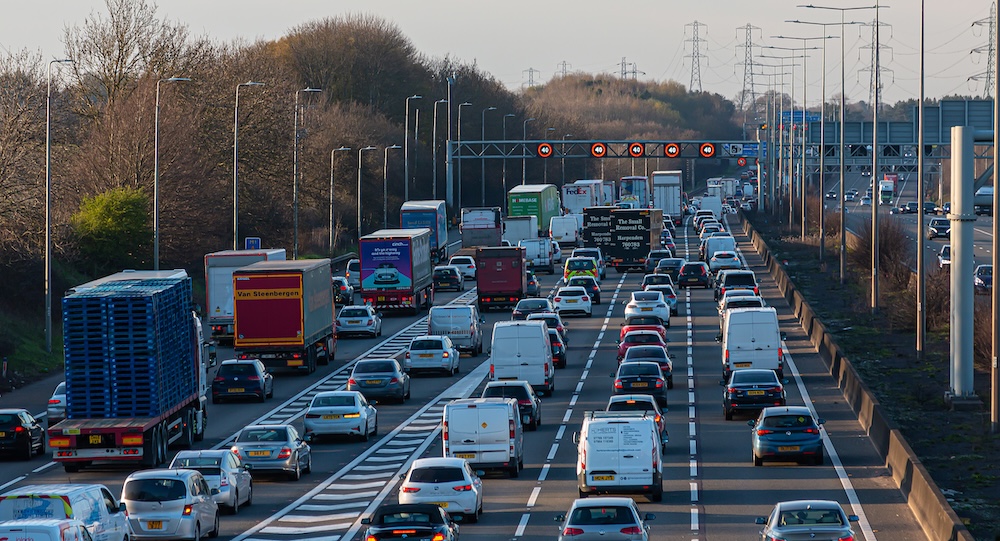
A car breakdown is stressful at the best of times. When it happens in heavy traffic, it can feel even more daunting because you’re dealing with other vehicles, limited space and potential safety risks.
Knowing what to do if your car breaks down in traffic can help protect you, your passengers and other road users while you arrange assistance.
If your car breaks down in heavy traffic, you should:
- Switch on your hazard lights immediately
- Try to move your vehicle as far left as is safe
- Stop in the safest available location
- Assess your surroundings before deciding whether to stay in or leave the vehicle
- Contact your breakdown provider from a safe location
- Call 999 if you or anyone else is in immediate danger
Are cars more likely to break down in heavy traffic?
While motorway driving can certainly put a strain on your car, it’s stop-start driving in heavy traffic that can cause the most damage.
Stop-start driving means your engine, cooling system, clutch and brakes are working constantly. At the same time, slower speeds reduce airflow through the radiator, making it harder for the engine to stay cool.
That’s why engine overheating is one of the most common causes of a breakdown in traffic. Problems such as a faulty cooling fan, radiator issue or damaged hose can become more noticeable when crawling through congestion.
What to do if you break down in traffic: step-by-step guide
1. Alert other drivers
As soon as you realise there’s a problem, switch on your hazard warning lights.
These help alert other road users that your vehicle is moving unusually slowly or has stopped unexpectedly. If visibility is poor because of rain, fog or darkness, keep your side lights on too.
2. Move to a safer position if possible
If your vehicle can still move, signal and carefully make your way towards the left-hand side of the road.
On a motorway, this may mean reaching the hard shoulder if one is available. On other roads, aim for the left-hand side or another safe location away from moving traffic.
Don’t make sudden manoeuvres or force your way across lanes. If traffic is stationary, wait for a safe opportunity to move.
3. Stop safely and secure the vehicle
Once you’ve stopped:
- Apply the handbrake
- Switch off the engine if appropriate
- Keep your hazard lights on
- Put the vehicle in gear or park, depending on the transmission
Take a moment to assess your surroundings before deciding what to do next.
4. Think carefully before leaving the vehicle
Whether you should stay in the vehicle or leave it depends on where you’ve broken down.
If you’re on a motorway hard shoulder and can safely get beyond a safety barrier, that may be the safest option.
However, if you’ve come to a stop in a live traffic lane or somewhere you cannot leave the vehicle safely, it may be safer to remain inside with your seatbelt fastened until help arrives or emergency services attend.
Always prioritise getting yourself and your passengers away from danger, but don’t put yourself at risk by stepping into moving traffic.
5. Stay aware of other hazards
Traffic jams can create additional risks.
Drivers and passengers sometimes leave their vehicles during long delays, while motorcyclists may filter between lanes. Stay alert to people moving around nearby and avoid unnecessary movement close to traffic.
6. Contact your breakdown provider
Once you’re safe, contact your breakdown provider and explain:
- Your location
- The nature of the problem
- Whether you’re in a particularly hazardous position
If there is an immediate risk to life or a serious danger on the road, call 999.
How to reduce the risk of a breakdown in traffic
While you can’t prevent every breakdown, regular maintenance can reduce the chances of being caught out in congestion.
Before your journey
Check engine oil and coolant levels
Low fluid levels can increase the risk of overheating, particularly during long periods of slow-moving traffic.
Keep your vehicle serviced
Regular servicing can identify worn or failing parts before they develop into more serious problems.
While driving in traffic
Drive smoothly
Leave a reasonable gap to the vehicle in front where conditions allow. This can help reduce constant braking, clutch use and acceleration.
Watch your temperature gauge
If your engine temperature starts rising, turn off unnecessary accessories such as air conditioning. In some situations, using the heater can even help draw heat away from the engine.
Be sensible when stopped
If your car is going to be sat still for a while, do what the manufacturer recommends for your car.
Be prepared for the unexpected
Breaking down in heavy traffic can be unsettling, but staying calm and putting safety first can make a difficult situation easier to manage. The important thing is to remain calm, avoid distractions, and keep your own and your passengers’ safety as a top priority.
By maintaining your car, recognising warning signs early and having reliable breakdown cover in place, you’ll be better prepared if the unexpected happens.
For more breakdown advice, driving tips and vehicle maintenance guides, explore the Green Flag blog.