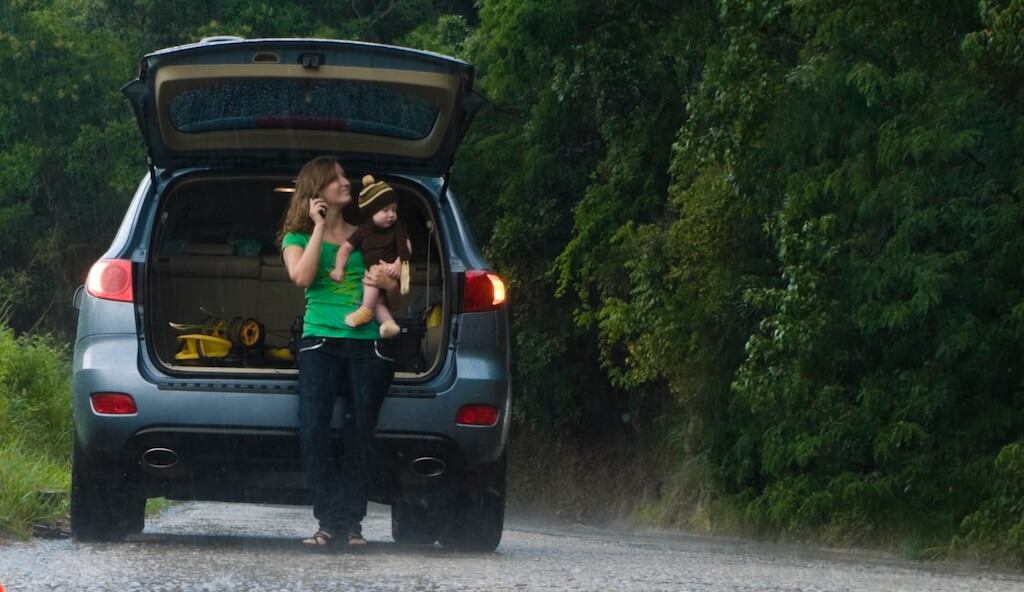
Breaking down is never ideal, but it can be especially difficult if you’re far from home in an area you don’t know. In these situations, knowing what to do next can help make things that bit easier. A few calm, practical steps can help keep you safe and get help on the way.
First things first: get somewhere safe
If you feel something’s wrong with your car, don’t try to “just make it” to the next town. Weird noises, warning lights on the dashboard, loss of power, or smoke are all signs to pull over as soon as it’s safe.
- Aim for a service station, lay-by, or another safe place away from traffic.
- If you’re on a motorway and can’t leave at the next exit, move onto the hard shoulder or into an emergency refuge area – if there is one.
- Once you’ve stopped, switch on your hazard lights. If it’s dark, foggy, or raining, keep your sidelights on too. Then get everyone out of the vehicle from the passenger side, away from traffic, and stand slightly away from the car – behind the barrier if there is one.
It’s tempting to stay in the car where it’s warm and dry, but your safety matters more than your comfort – and a static car on the side of a motorway can be a hazard.
Don’t try to fix it yourself
If you break down far from home, it’s easy to start lifting the bonnet, trying to investigate the problem yourself, or searching online for a “quick fix for engine warning light”. But roadside repairs can be dangerous, especially on fast roads.
Unless you’re somewhere completely safe, it’s best to wait for professional help to arrive. And that’s exactly what breakdown cover is for.
Call for help, and be clear about where you are
Before you call for help, try to gather a few useful details. If you’re far from home, there’s a good chance you’ll be in an unfamiliar area, which can make it harder to describe exactly where you are. So, take a moment to look for road names, junction numbers, nearby landmarks or other details that can help pinpoint your location.
Servies such as what3words can also help you provide accurate location details and make it easier for assistance to reach you.
What do you and your passengers need next?
Breaking down far from home can affect more than just your vehicle. You may also need to think about your passengers, your journey, and how you’ll continue travelling if your car can’t be repaired straight away.
Different breakdown policies provide different levels of support. Depending on your cover, this may include roadside assistance, recovery, or help continuing your journey if your vehicle can’t be repaired immediately.
Before setting off, it’s worth checking what support your breakdown cover provides so you know what options are available if you need them.
Choose cover that fits your driving habits
No two drivers are the same. Maybe you only ever drive your own car. Maybe you share vehicles with your partner. Maybe you’ve got two cars at the same address, or you’re often a passenger in someone else’s vehicle. That’s why it’s important to make sure your breakdown cover works for you.
You can choose vehicle cover for a specific car, personal cover if you want cover as a driver or passenger in different vehicles, multi-car cover for more than one vehicle at the same address, or family cover for several people in your household.
If you’re planning to drive abroad, it’s also worth checking whether your policy includes cover for overseas travel.
Before you set off on your travels
No one plans to break down when they head out on a long journey, but a little preparation can make a big difference if it happens. Understanding what support is available, knowing who to contact and having a plan in place can help keep your journey on track.
Before setting off, take a few minutes to check your breakdown cover and make sure it meets your needs. In the meantime, keep up to date with the Green Flag blog for more handy motoring and breakdown tips.