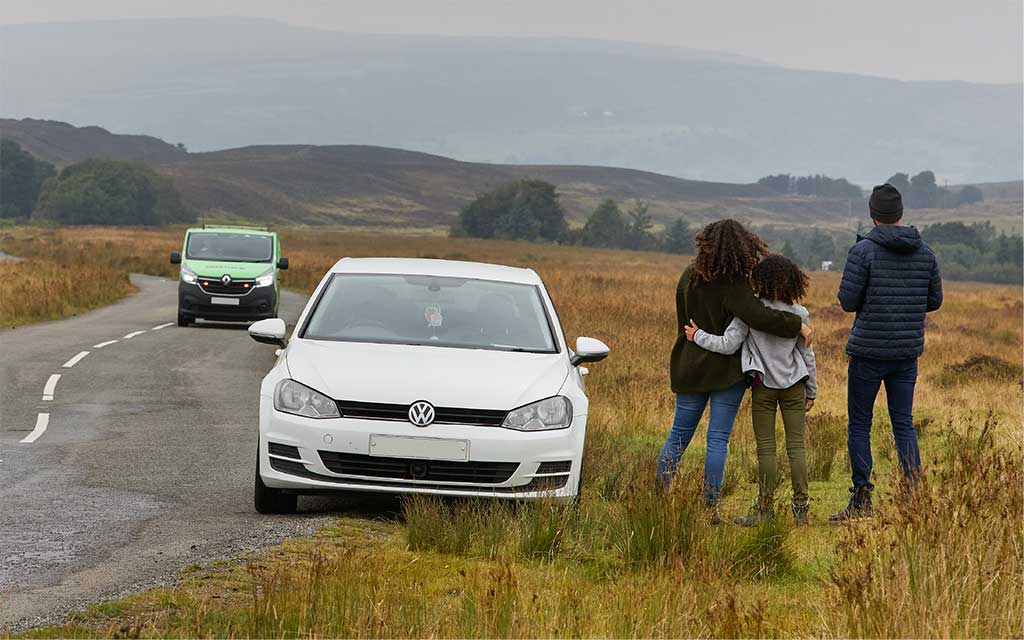
Breakdowns happen. Whether it’s a flat tyre, an overheated engine, or an unexpected mechanical fault, being stranded on the side of the road can be a stressful experience. And this is not just true for the driver, but for every passenger in the vehicle. Preparation, clear communication, and staying calm can all help to keep the situation under control.
This guide explains practical steps drivers and passengers can take to stay safe and composed while waiting for help. The goal is to help everyone remain as comfortable and informed as possible during a breakdown.
1. The importance of staying calm
When a vehicle suddenly stops working, adrenaline spikes and emotions can run high. Staying calm helps you think clearly and make safer decisions.
Why it matters
- Staying calm helps people avoid unsafe decisions, like leaving the vehicle without checking traffic.
- A calm driver can think through the next steps logically and communicate clearly.
- Passengers look to the driver for reassurance. A composed tone helps everyone feel safer.
What you can do
- Take a slow breath. Deep breathing reduces stress hormones and improves focus.
- Acknowledge the situation out loud: “We’re stuck for now, but we’ll sort this out safely.”
- Focus on what you can control.
2. Stopping in a safe place
If your vehicle can still be driven safely, your priority should be to move out of traffic as soon as possible. Aim to pull over onto the shoulder, hard shoulder, or into a designated lay-by. Choose your stopping point carefully – ideally on a straight stretch of road, beyond bends, and avoiding spots where approaching drivers may have limited visibility. Stopping on flat ground is also preferable, as it reduces the risk of the vehicle rolling if there’s an issue with the handbrake.
If you can’t move the car, switch your hazard lights on immediately to alert other drivers. If you carry a warning triangle, it can help make your vehicle more visible on quieter roads – but only attempt to place it if it’s safe to leave the vehicle, and you can do so without stepping into moving traffic.
3. Get your passengers to safety
It can be tempting to immediately get out of the vehicle once it has stopped, but in many situations, remaining inside the car could be the safest option – particularly on busy roads. Passing traffic can be travelling at high speed, and even a moment of distraction from another driver can create a serious risk.
The UK Highway Code advises that you should not stand, or allow anyone else to stand, between your vehicle and oncoming traffic. At night or in poor visibility, you should avoid standing where you might prevent other road users from seeing your lights. These guidelines are designed to reduce the risk of secondary collisions, which can occur when drivers do not spot a stationary vehicle in time.
There are exceptions. If your vehicle has stopped on a high-speed road and you can safely exit on the side furthest from traffic – for example, behind a crash barrier – it may be safer to move well away from the carriageway.
4. Staying safe with children or vulnerable passengers
Young children, older passengers, or anyone with additional needs may find a breakdown particularly unsettling, especially due to the unfamiliar surroundings, flashing hazard lights, and uncertainty of waiting.
Taking a few extra steps to protect both their physical safety and emotional well-being can make a significant difference.
Position them safely
If possible, seat children and vulnerable passengers away from the side of the vehicle closest to traffic, ideally nearer the centre seats. Make sure seatbelts remain fastened, unless instructed to exit the vehicle safely.
Offer comfort items
Familiar objects such as a favourite toy, blanket, or snack can provide reassurance and distraction. Even something small can help regulate emotions in a stressful moment.
Keep explanations simple and calm
Use clear, age-appropriate language to explain what’s happening. For example: “The car needs a little help, and someone is coming to fix it.” Avoid overloading them with detail or showing visible frustration.
Maintain supervision
Children should never be allowed to wander outside the vehicle unsupervised, particularly near traffic. Keep them close and within arm’s reach if you do need to exit to a safe area.
Stick to what they know
Reading a story, playing a quiet game, or chatting about familiar topics can help things feel more normal. Predictability helps reduce stress and gives everyone something positive to focus on while waiting.
5. Make use of lighting, signals, and locations
Making your vehicle as visible and locatable as possible helps both safety and rescue response.
- Turn on hazard lights – These warn other drivers that you’re immobile.
- Use interior lights if it’s dark – This helps make your car more visible and signals that it’s occupied.
- Share your location – Passengers can help by checking the GPS or road signs and telling the driver.
6. Avoid common mistakes
Breakdowns can feel stressful, but a calm approach helps keep everyone safe – and prevents the situation getting trickier than it needs to be. Try to avoid the following:
Overreacting
It’s normal to feel stressed, but shouting, blaming, or assuming the worst can quickly raise anxiety for everyone in the car. Passengers (especially children) often take their emotional cues from the driver, so a calm tone helps keep the situation under control.
Rushing outside
Getting out immediately to inspect the car might feel like the right move, but it can be risky on busy roads. Always assess traffic and surroundings first.
Ignoring instructions
A breakdown needs one clear decision-maker, usually the driver or responsible adult. If passengers act independently (leaving the vehicle, arguing, or refusing to follow safety guidance), it increases confusion and risk. Clear communication and cooperation keep everyone safer.
7. Waiting for help – what to expect
Once assistance is on the way, take a moment to explain what will happen next. Clarity helps passengers feel reassured and prepared.
Typical steps include:
1. Your location will be confirmed
The breakdown service will use the details you’ve provided, such as GPS, a postcode, or nearby road signs, to find you. You may be asked to confirm your exact position, especially on motorways or rural roads.
2. You might receive a call
A technician or dispatcher may contact you to clarify what happened, check how many people are in the vehicle, and confirm that you’re in a safe place.
3. Help will assess and resolve the issue
When assistance arrives, the technician will inspect the vehicle. Many problems can be fixed at the roadside. If not, the vehicle may be towed to a safer location or garage.
8. Know when to seek help early
Recognising a problem with your car and getting it fixed as soon as possible can prevent a breakdown from happening. It’s always worth keeping an eye on:
- Strange noises or smells while driving
- Dashboard warning lights persisting after checks
- Poor vehicle performance (e.g., loss of power or overheating)
Encourage passengers to point out anything unusual, too, as these observations can help prevent an outright breakdown.
Staying safe and calm behind the wheel
Breakdowns are inconvenient and can be stressful, but with thoughtful communication, clear safety actions, and a calm atmosphere, you can protect both the physical safety and emotional wellbeing of everyone in the vehicle.
Preparation today – like knowing how to stop safely, communicate effectively, and make strategic decisions – helps make sure that if the unexpected happens, you and your passengers stay calm, safe, and ready to handle it together.