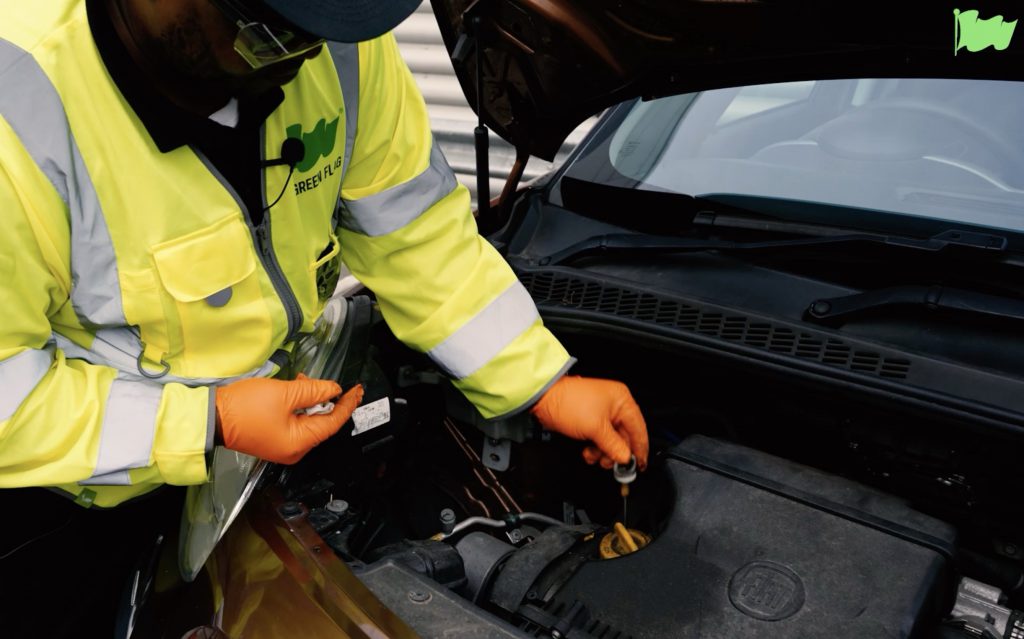
Checking your car’s oil level is a simple yet key task which will help to keep your car running at its best. We’ve got you covered with everything you need to know about checking your car oil.
We explain what oil does, why it’s important, how to see if your car’s running low on it, how to top it up, and much more. All this, plus our step-by step guide and expert video. Very slick!
What types of car oil are there?
Which is the right oil for my car?
How do I check oil in a car?
How do I safely top up my car’s oil?
Video guide to checking your car’s oil
Seasonal advice for getting the best from your car oil
Do electric vehicles need car oil?
Is car oil safe for the environment?
What’s car oil and why’s it important?
Car oil, often called engine oil, is a lubricant which helps your car to run smoothly by preventing metal-on-metal contact, reduce friction, fight corrosion, clear away sludge and combat wear and tear. Car oil is a mostly refined base oil with additives.
New oil is a clear golden colour, while used oil is dark brown. Regular oil checks are important because additives are used up or become less effective over time, and oil can become contaminated which reduces its positive effect on your car’s engine.
What types of car oil are there?
There are four main types of car oil:
- Conventional (mineral): This comes from crude oil and is usually suitable for older cars with simple engine designs and normal driving habits.
- Full synthetic oil: This has been chemically engineered for superior performance, high-temperature protection and longer intervals between changes.
- Synthetic blend (semi-synthetic): This is a mixture of conventional and synthetic oils, offering better protection than conventional but cheaper than full synthetic.
- High-mileage oil: This contains seal conditioners and additives designed for vehicles with upwards of 70,000 miles on the clock, to reduce oil consumption and leaks.
Car oils also have gradings for their viscosity, which is a measure of the fluid’s resistance to flow – effectively how thick (like honey) or thin (like water) it is. The first number(s) represent the current weather conditions, and the second number is based on normal operating engine temperature. E.g. 0W-20 translates to zero degrees weather and 20 degrees normal operating engine temperature.
Always check your car’s manual for the specific type of oil to use on it. Using the wrong type of oil could cause immediate or long-term damage ranging from fuel efficiency to engine failure.
Which is the right oil for my car?
The best way is to check your owner’s manual for specific specifications. Older cars often run better on high viscosity (thicker) oils, while modern cars usually require low viscosity (thinner) oils. However, always check your car’s manual or the oil cap for the correct specific type of oil to use.
Car oil viscosity
| Oil grade | Typical usage |
| 0W-20 and 0W-30 | Newer cars: High efficiency, very cold starts. |
| 5W-30 | Most common: Ideal for modern cars and the UK climate. |
| 5W-40 | Modern and slightly older cars: Good for high-performance. |
| 10W-40 | Older cars: Those with a higher mileage with petrol or diesel engines. |
| 15W-40 | Old cars: Very high mileage and warmer climates |
Can I mix car oils together?
Yes, but only as an emergency short-term resolution to top up low oil, not as a continued maintenance practice. Modern oils are generally compatible, but mixing can change viscosity and affect additives, potentially reducing engine protection and performance.
If you do mix oils, be sure to plan an oil change sooner than usual to replace the mixture with your car’s usual recommended oil for better long-term car engine health.
How do I check oil in a car?
Checking car engine oil and topping it up are straightforward bits of maintenance which will help to keep your car on the road. But, what’s a dipstick and how do you find it? Follow our step-by-step guide and watch our expert show how it’s done.
Step 1: Park your car on level ground and wait for the engine to cool
Make sure your car is on level ground and the engine is switched off. It’s important to leave your car for a while so it can cool down. Make sure the car is cold before you open the bonnet to avoid injury from hot parts and fluids.
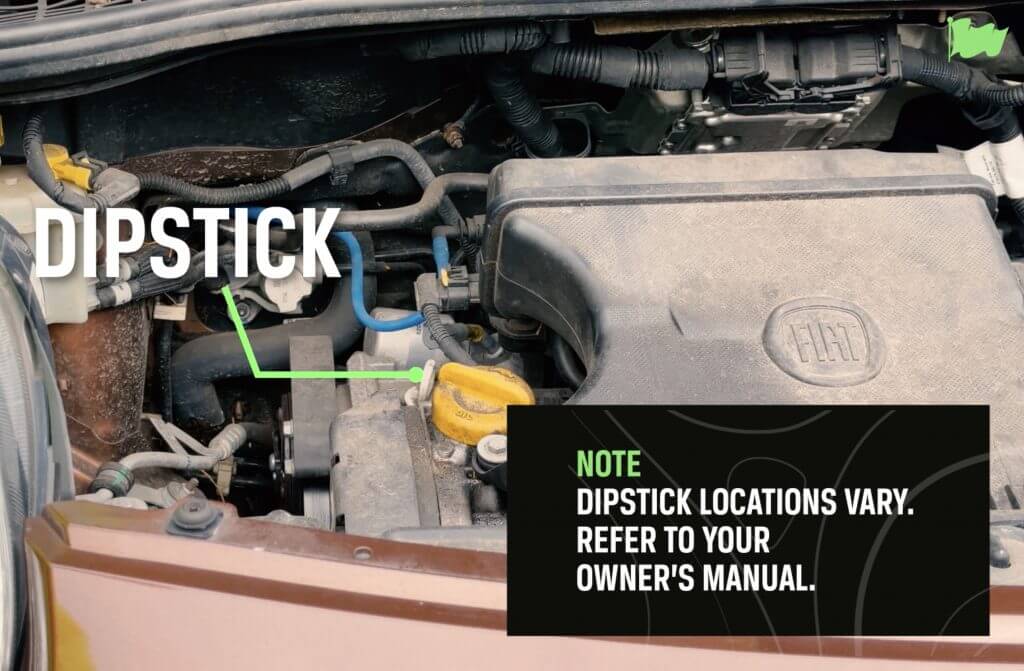
Step 2: Locate your car’s dipstick
A car’s dipstick is a thin metal rod used for measuring the level and condition of a car’s oil. The length ranges from 15 inches to 25 inches (approx. 400mm to 650mm) depending on make, model and engine type and usually has an orange, red or yellow loop handle. The dipstick is housed in a tube and passes through the engine into the oil sump (pan reservoir).
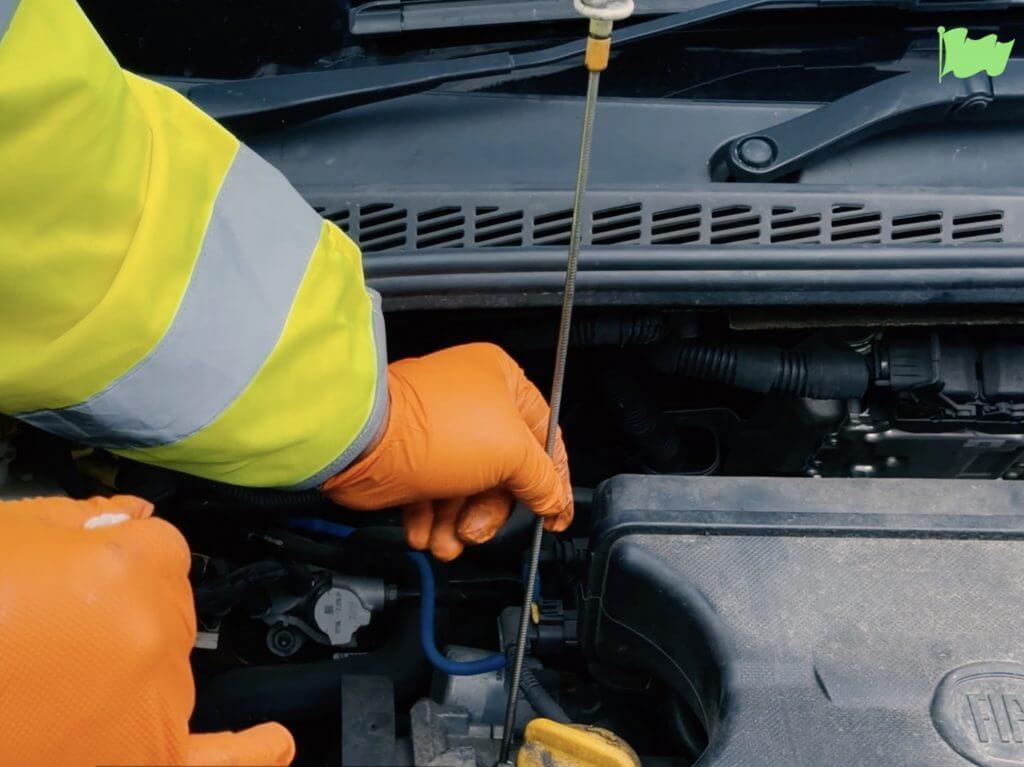
Once your engine has had enough time to cool, open the bonnet and look for the coloured looped handle, usually next to the engine. Carefully, pull the dipstick out by using the looped handle and thoroughly wipe it clean with a cloth before placing it back into its tube. This makes sure that there’s nothing on the dipstick that could give a false reading. With a clean dipstick the oil level test will be an accurate one.
Step 3: Checking your car’s oil level
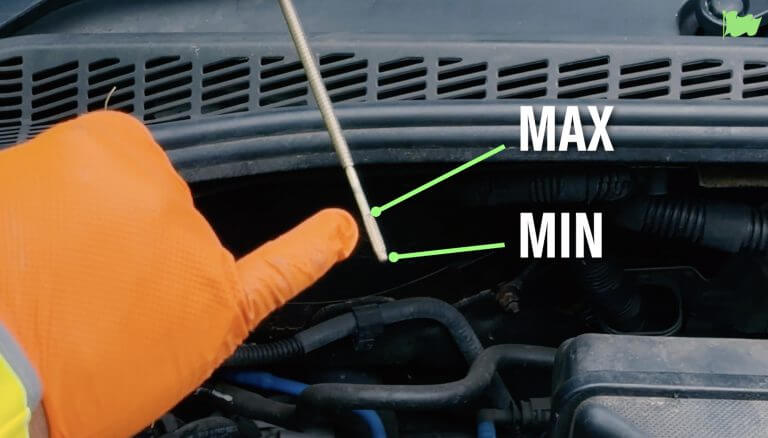
Now to check the oil level. Pull the dipstick fully out and look at the end for two markers which represent minimum and maximum. The ideal level for your oil is between the ‘min’ and ‘max’ lines. If the oil level is nearer the lower end, it needs topping up.
How do I safely top up my car’s oil?
If the level shown on the dipstick is low, carefully add the correct oil for your car. Add it gradually and remember to wipe the dipstick clean before testing each time until it reaches the required level (midway between minimum and maximum). Once you’re satisfied, place the dipstick back into its tube and make sure it’s safely in place.
If you find that the oil level keeps dropping, your car may have a leak and need looking at by an expert. It’s essential that warning signs such as leaks under your car, dashboard warning lights, unusual engine noises and sluggish or rough acceleration and performance are not ignored. These are all signs of low or leaking oil.
Video guide to checking your car’s oil
Our patrol technician, Kema, is back with another masterclass to show you how to check and top-up your car oil.
When should I check my car’s oil?
You should check your car’s oil level every few weeks (or around 1,000 miles), especially before long road trips to make sure your journey goes smoothly. If you know that your car consumes more oil, it’s best to check more frequently so that an optimum level is maintained.
It’s not only a low level of oil that could be a problem, it also shouldn’t be filled above the maximum limit either. These are the most common signs that point towards your car’s oil needing a check:
- Dashboard warning light: Cars usually have a dashboard warning light to let you know the car is overheating and the oil level needs to be checked.
- Leaks underneath your car: An engine leak can cause a puddle of oil under your car. This means it could be escaping from the reservoir.
- Engine noise: This is often a sign that your engine is overheating, possibly caused by issues with the oil.Check it immediately (once it’s cooled down and is safe to do so).
- Rising temperature gauge: If the needle is in or near the red zone, it means your car is overheating and could be a direct result of the oil running low.
- Poor acceleration and bumpy ride: If you feel your car’s acceleration becoming sluggish or a usually smooth ride becomes rough and clunky, there could be link to your car’s oil.
What do I do if my engine overheats?
Car oil is critical for lubricating moving parts of your car’s engine and reducing friction. Without enough oil, friction increases and that produces extreme heat which leads to the engine overheating. If this happens, it’s very important to act fast and follow these steps:
- Turn off the air conditioning: Air conditioning puts extra strain on the engine, so switching it off will immediately reduce the load.
- Pull over somewhere safe: Park out of the way of other cars, where you can get out get out safely without endangering anyone. Never keep driving.
- Shut off the engine: Once the engine is off, it’ll stop any further damage or heat building up.
- Wait for the engine to cool down: This usually takes up to 30 minutes. Waiting for the engine to cool will reduce the chances of any burns or injury.
- Check engine oil levels and leaks: See our step-by-step guide above for how to check for leaks and locate, assess and (if necessary) top-up your oil so it’s between the ‘min’ and ‘max lines.
- Test the engine: If you can’t spot any leaks and the oil level is now in the middle of ‘min’ and ‘max’, start the engine. Monitor the temperature gauge – if it immediately rises again, turn off the car and get in touch with your breakdown provider.
Seasonal advice for getting the best from your car oil
You should check your car’s oil levels every few weeks all year round, but certain types of oil can be better during summer or winter months, depending on your plans. Here’s how drivers can get the best results from their car oil:
| Time of the year | Things which could benefit your car |
| In the summertime | – Cruel summer: Extreme heat thins oil, making it less effective at protecting engine parts. It’s recommended changing your car’s oil when summer arrives. – Summer jam: Heavy traffic in the hot weather can speed up oil degradation, causing sludge. Consider a change if you’re planning a traffic-heavy summer in the city. – Summer loving: If you’re planning a summer road trip, a fresh oil change and some love will give you peace of mind. |
| Winter | – Pre-winter oil change: You could change your oil before the cold weather hits to make sure you get maximum protection. – Short winter trips: If you make frequent short trips in winter, consider changing your oil slightly earlier to avoid moisture build up in the oil. – Cold weather makes oil thicker: Synthetic oils flow better in cold temperatures compared to conventional. Using this will reduce engine wear and strain. |
| All year round | – Long journey planning: It’s sensible to check your car’s oil before long road trip just in case it needs topping up (or lowering) before you set off. |
Do electric vehicles need car oil?
No, electric vehicles (EVs) don’t need engine oil because they lack an internal combustion engine and have fewer moving parts that require lubrication. However, they do use other fluids, such as coolant for the battery and sometimes transmission oil for the reduction gear.
While oil changes aren’t needed, EVs still require maintenance for coolant, tyres, brakes (which last longer due to regenerative braking), suspension, and cabin air filters.
Is car oil safe for the environment?
No, car oil isn’t safe for the environment. It’s considered hazardous waste, and improper disposal can have severe, long-lasting effects on the community, soil, water, and wildlife.
Oil spills, even small ones from leaks, can coat, trap, and kill animals, and disrupt aquatic ecosystems. Meanwhile, burning of car oil can release harmful contaminants into the air.
You can do your bit to help the environment by:
- Disposing responsibly: Never dump used oil in the bin, down a drain, or on the ground. It must be taken to a local hazardous waste disposal centre or a dedicated oil bank. Most sites accept up to 10-20 litres, but it must be sealed in a secure container. Find your local hazardous waste disposal centre.
- Fixing leaks: Check that your vehicle isn’t leaking oil onto the street, where it can cause danger, harm animals and wildlife, and enter drains. If you find a leak, arrange for it to be repaired immediately.
What are the correct disposal routes for used car oil?
Spills or dumping of oil can cause catastrophic contamination and damage to people, soil, water, and wildlife, so it’s vital that it’s disposed of correctly, responsibly and safely. Always store oil sealed, clean spills immediately, and take used and unwanted oil to a hazardous waste or recycling facility. Never pour oil down a drain.
To make sure that your oil is disposed safely, find your local hazardous waste disposal centre.
Is car oil dangerous to humans and animals?
Yes, car oil is highly dangerous to both humans and animals. Swallowing even small amounts can result in medical issues and contact with oil can cause skin irritation or worse if prolonged.
Oil spills, even small ones from leaks, can coat, trap, and kill animals, and disrupt aquatic ecosystems. That’s why leaks in garages and on pavements, driveways, etc, should be cleaned up immediately and containers be kept sealed and out of reach of children and animals.
When using oil, it’s advised to wear gloves and wash skin thoroughly with soap if contact occurs.
How much does car oil cost?
Car oil usually costs between £8 to £15 per litre. Prices vary based on vehicle type, oil viscosity, and brand. Specialised, high-performance and fully synthetic oils are at the higher end of the range, followed by semi-synthetic and conventional oil.
The better performance, longer life, modern and superior protection an oil provides, the more it costs.
For more information, check out Green Flag car maintenance advice, our frequently asked questions or contact us.
Very useful information, as always.
Thank you for very important reminders.
Useful IF your car has a dipstick – mine doesn’t – (BMW have done away with dipsticks on some of their engines – relying on an electronic oil level check) – personally I would prefer a dipstick, which not only confirms the oil level, but also shows you the colour and condition of the oil. But hey, that’s progress.
Mentions changing oil quite a few times but no info on how to do. Good info on topping up though.
My Volvo V40 does not have a dip stick. It is done electronically from the steering wheel stick control. However I have not been able to make it work so far!
Very impotent information, Thanks
Some cars including my 2019 Audi A4 (B9 generation) do not have a engine oil dipstick. The section mentioning the dipstick says “Dipstick locations vary. Refer to your owner’s manual”. That does not suggest the possibility of no dipstick.
Thank you for the message greatly appreciated.
This guide is great for those people who don’t understand the importance of being proactive in looking after their car. I have always checked my oil every few weeks. I change it or get it changed at half the service interval. At a cost – yes. But it is far better for my car’s engines. It is a total spend to save. The cost of oil is far outweighed by the cost of a problem with a modern engine.
information is always welcome, as a woman driver l learn a lot from you. Thankyou
My car doesn’t have a dipstick (apart from some of the novice drivers that it encounters while I’m out). I have to wait for a little warning light to come on. I’d far rather have a proper dipstick…
Thankyou for your support and very important information.