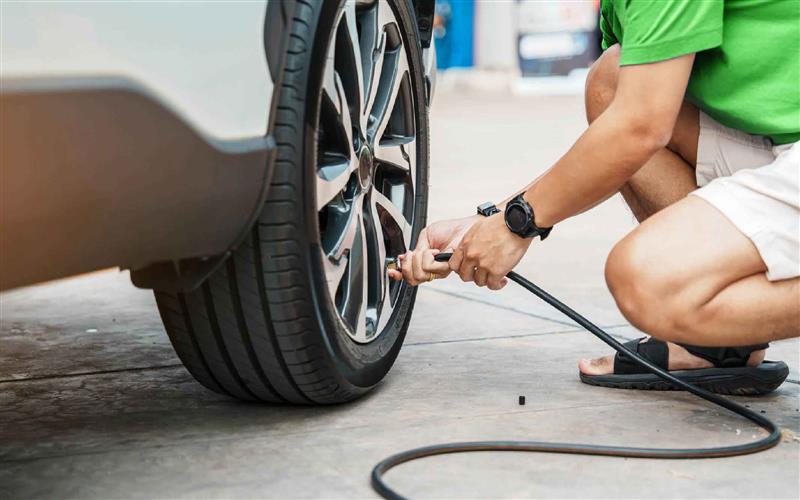
Checking your car’s tyre pressure is an essential task to help to keep your car running safely. Why is the right tyre pressure so important? What’s the pressure gauge, and how do you pump up your tyres?
We’ve got it all covered in our step-by-step guide and expert video to keep the pressure in your tyres and not on you!
How do I know my car’s tyres need checking?
What do I need before checking my car’s tyre pressure?
How do I find the correct tyre pressure for my car?
How do I check tyre pressure?
How often should I check my car’s tyre pressure?
Video guide to checking your car’s tyre pressure
What if my car tyre won’t hold pressure?
Do electric vehicle tyres need to be checked?
Why does tyre pressure matter?
Making sure your car’s tyre pressure is correct is vital for road safety, your car’s fuel efficiency and the longevity of your car’s tyres. Correctly inflated tyres hold maximum grip on the road for safe handling and braking. Incorrect pressure can increase fuel consumption, cause uneven wear, which can lead to potential ‘blow-outs’, and reduce a tyre’s traction. These could all lead to your car failing its MOT.
Incorrect tyre pressure can lead to legal consequences if it makes your vehicle unroadworthy or dangerous. This may result in a Fixed Penalty Notice and penalty points. In serious cases, police can prohibit the vehicle from being driven until the tyres are corrected or replaced.
How does tyre pressure affect the tyre tread on my car?
Tyre pressure dictates the tyre’s tread area on the road: think of it as your tyre’s footprint.
Over-inflation causes the tyre’s centre to bulge, resulting in an uneven footprint and faster wear. Under-inflation causes the tyre to sag, leading to faster outside tyre wear and an uneven tread.
Correct inflation ensures your car’s footprint is balanced, resulting in even wear and safer steering and braking.
See our blog about being a better friend to your tyres.
How do I know my car’s tyres need checking?
There are three main ways to find out if you need to check your car’s tyre pressure:
- Tyre pressure warning light: This is a horseshoe-shaped image with an exclamation mark inside it on your dashboard. This represents a tyre, and if this tyre pressure indicator lights up, you should check your tyres straight away.
- Heavy steering or vibrations: If you experience handling issues with your car, it could be because your tyres are over or under-inflated. Park up somewhere suitable and check.
- Visual inspection: Over or under-inflated tyres are easily noticeable by sagging or bulging. Don’t ignore it. Fix or replace your tyres before driving.
Follow our step-by-step guide below to check and alter your car’s tyres as soon as you suspect the pressure isn’t right.
What do I need before checking my car’s tyre pressure?
Before you check your tyre pressure, make sure you’ve parked in a safe place and that the engine and tyres are cold. This is to make sure it’s safe for you to check and that you get an accurate reading.
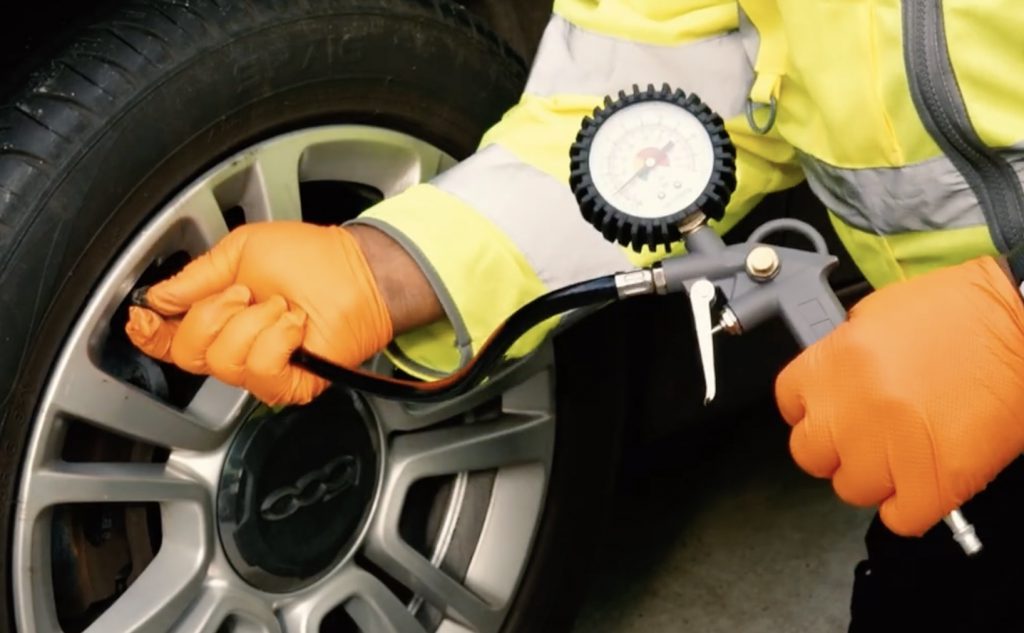
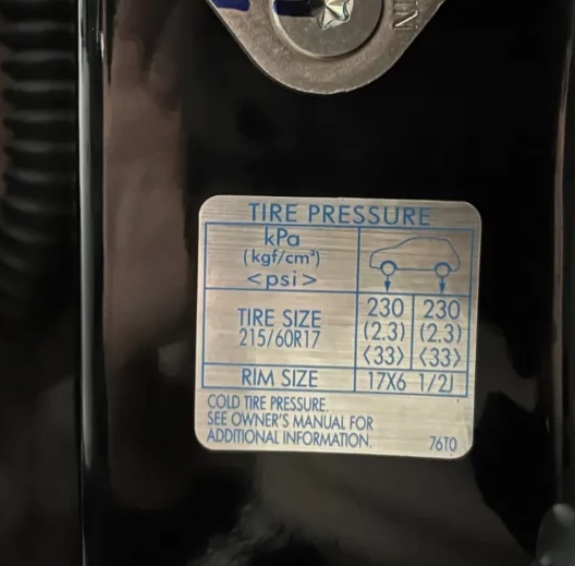
You’ll need a tyre pressure checker called a ‘tyre pressure gauge’. You’ll also need your car’s recommended PSI (pounds per square inch) or BAR (metric units), which you can find in the owner’s manual, inside the driver’s door or sometimes on the tyres themselves. You’ll need a tyre inflator in case you need to inflate the tyres. You can use the gauge to deflate them, if needed.
Gauges are available in digital or in analogue form (like a clock face). Once plugged into your tyre’s valve, they give you a reading of the PSI. Different tyres require a different amount of pressure. Pumps can come in electric, wireless or manual form.
How do I find the correct tyre pressure for my car?
You can find the recommended pressure (PSI or BAR) for your car in the owner’s manual, on the inside of the driver’s door, inside of the fuel flap or on your car’s tyres. The lower your PSI reading is below the recommendation, the more under-inflated the tyre is.
Always go by the recommended PSI or BAR. If you can’t find your car’s recommended tyre pressure, speak to an expert.
How do I check tyre pressure?
Step 1: Park your car on level ground and wait for the engine and tyres to cool
Make sure your car is on level ground, and the engine is switched off. It’s important to make sure your car has cooled down.
Step 2: Checking your car’s tyre pressure
To check the pressure of your tyre, remove the valve cap and place the pressure gauge firmly on the valve until the hissing stops. The tyre’s current pressure should then appear on your pressure gauge as a number in PSI or BAR.
Compare this to the recommended pressure in PSI or BAR. If the reading is outside of the recommendation, you’ll need to deflate the tyre (if the reading is high) or inflate the tyre (if the reading is low). Once you’ve finished checking, firmly screw the cap back onto your tyre’s valve and make sure it’s tightened. You’ve completed your tyre pressure check, but do you need to alter the pressure?
Step 3: How to alter your car’s tyre pressure
If you’ve read your tyre’s pressure and found that the pressure is lower than recommended, you’ll need to inflate it. This means you’re going to increase the pressure to a higher number. Firstly, double-check the tyre’s current pressure to confirm it needs inflating.
To pump air into your tyre, remove the valve cap and attach your air compressor (pump). Slowly pump the air into the tyre while monitoring its current pressure. Once you’ve reached the recommended pressure, detach your pump and firmly screw the cap back onto your tyre’s valve. Once you’ve made sure it’s tightened, you’re good to go!
If the pressure is higher than recommended, you’ll need to deflate it. This means you’re going to bring the pressure down to a lower number. First, double-check the tyre’s current pressure and confirm it needs deflating.
To remove air from your tyre, remove the valve cap and attach your gauge. Use the small nub on the back (or push the centre pin) to slowly release air while monitoring its current pressure. Once you’ve reached the recommended pressure, firmly screw the cap back onto your tyre’s valve and make sure it’s tightened.
How often should I check my car’s tyre pressure?
You should check your car’s tyre pressure at least once a month, even if your car has a TPMS (tyre pressure monitoring system).
You should also check tyre pressures before long road trips and after sudden changes in temperature.
Video guide to checking your car’s tyre pressure
Our patrol technician, Kema, is here to demonstrate how to check and adjust your car’s tyre pressure.
What if my car tyre won’t hold pressure?
There are several potential reasons why a tyre could be losing pressure:
- Slow puncture: The most common cause is a nail or screw in the tyre. The object often stays in the tyre and loses a small amount of air per day.
- Faulty or damaged valve: The valve stem (where you add air) can crack, dry out, or become loose, allowing air to escape.
- Damaged bead: The bead is the edge of the tyre that seals against the wheel rim. Corrosion or debris can break this seal. This can be common in alloy wheels.
- Bent or cracked wheel rim: Hitting a kerb or pothole can create a small dent in the metal wheel, causing a gap between the rim and the tyre.
- Temperature changes: A drop in temperature can cause tyre pressure to fall. If your tyre is already low, this can trigger a warning light.
These can all lead to a steady decline in tyre pressure, even when the vehicle is parked. They should be addressed as soon as possible, and the car shouldn’t be driven until the issue is fixed.
If you find you have to top up your tyre pressure more than once a month, have them checked out by a professional.
Is it safe to drive with a tyre that can’t hold pressure?
No. Driving a car with a tyre which can’t hold pressure is very dangerous and can lead to poor handling, reduced stability, more fuel consumption, potential damage to the wheel or car structure, or even a blowout.
How do I know my car tyre is leaking air?
These are three simple ways to check for a leak:
- Water test: Spray soapy water around the valve, the entire tread and the edge of the bead (rim). Bubbles will form where any air is escaping.
- Hissing noise: Listen out for a faint hissing sound, especially when the tyre is warm or under pressure.
- Inspect the valve: Gently wiggle the valve stem to see if it makes a hissing sound. If it does, it’s faulty.
Additional advice to get the best from your car tyres
Here are things which can affect tyre pressure throughout the year and what drivers should consider doing to help get the best results from their tyres:
| Situation | What to do |
| Any time | You should check the pressure of your car’s tyres at least once a month, especially before long trips and after a big change in weather temperature. |
| Carrying heavy loads | When your car is heavily laden with passengers or luggage (carrying a heavier load), the tyres must have a slightly higher air pressure than normal. |
| Roof racks | If you’re using your car’s roof rack, your car will be heavier than usual so an air pressure reading might be higher. |
| Summer | High temperatures cause air to expand and can lead to overinflation, reduced grip and uneven tread. It’s wise to keep an eye on this as you may need to slightly deflate them to the recommended level. |
| Towing | Towing another vehicle will mean your car’s tyre pressure will need to be slightly higher than normal to help bear the weight. |
| Winter | For every 10oC drop in temperature, the pressure of a tyre falls by up to 1 to 2 PSI. So, checking your tyre pressure on a regular basis can help to keep pressure at the recommended level. |
Do electric vehicle tyres need to be checked?
Yes, electric vehicles (EVs) require regular tyre pressure checks.
EVs are often heavier than internal combustion engine (ICE) cars because of their batteries and other technology, so should have more regular tyre checks. These checks can help with:
- Safety: Under‑inflated tyres can reduce handling and cause uneven wear. Because EVs deliver instant torque, maintaining correct tyre pressure is especially important.
- Performance: Maintaining the proper pressure helps with battery performance and can increase your car’s efficiency.
While many modern EVs have a Tyre Pressure Monitoring System (TPMS) which displays real-time air pressure stats on the dashboard, manual checks are still crucial for accuracy.
How much do new car tyres cost?
The cost of new car tyres varies depending on brand, quality, size, intended use and whether fitting is included. Prices can range from around £45 per tyre for unfitted budget options, to £300 or more per tyre for fitted 4×4 or SUV tyres.
On average, mid‑range tyres for a standard car cost around £100 per tyre, while premium tyres for a family saloon typically cost around 50% more, depending on specification and size.
In general, the better the performance, longevity, size and grip a tyre offers, the more it is likely to cost. While second‑hand tyres are available, it is strongly recommended that drivers choose new tyres, as used tyres may have unknown wear or damage that could affect safety.
For more information, check out Green Flag car maintenance advice, our frequently asked questions or contact us.