Why is an MOT so important? How do you book an MOT and what will be checked? Do you need a valid MOT to use your breakdown cover? We’re here to answer all these questions (and more).
How do I find out if my car’s MOT is due?
Can I drive my car if it doesn’t have a valid MOT?
How do I book an MOT?
What’s checked during an MOT?
What happens if my car fails its MOT?
Do electric vehicles need an MOT?
How much does an MOT cost?
Does my car need an MOT if I don’t plan to drive it?
What’s a car MOT?
A Ministry of Transport (MOT) test is an annual inspection of a car’s road worthiness. It can only be carried out at approved MOT test centres, where experts can analyse and test the safety and functions of your car.
The test covers your car’s body, brakes, electrics, exhaust, fuel system, lights, steering and more. At the end of the test your car will either pass or fail.
If your car passes the test, you’re all good for another year. If your car fails the test, you’ll get a certificate outlining the reasons why. Once you’ve got those issues sorted, you can then have the vehicle retested (and hopefully get a pass this time).
Driving without a valid MOT – by either missing a test or by driving with a failed test – isn’t just dangerous it can lead to fines of up to £1,000. It can also render your breakdown cover invalid and affect your car’s insurance policy. So, not worth the risk.
How do I find out if my car’s MOT is due?
There are two ways to check when your car’s MOT is due.
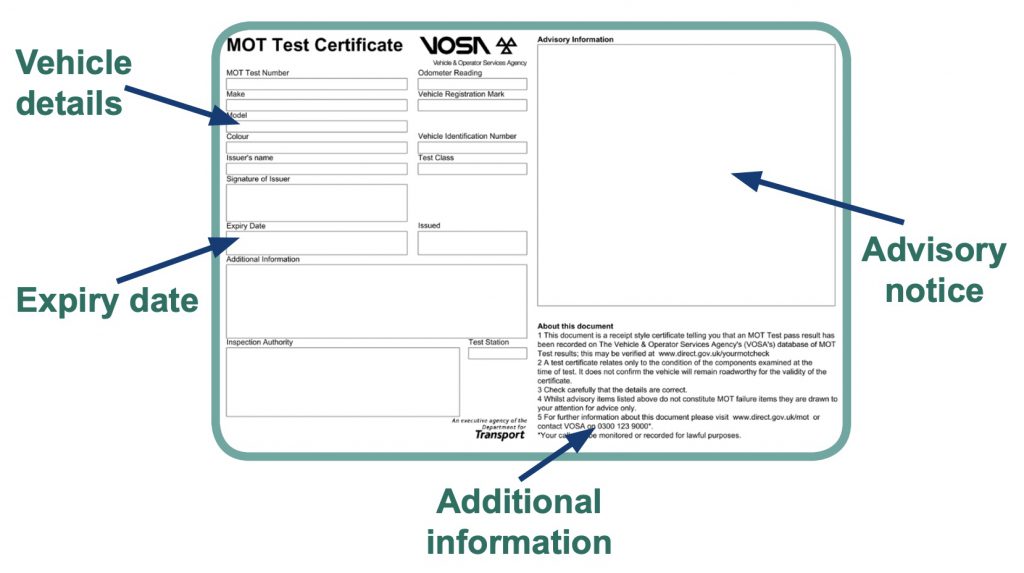
The expiry date is displayed on your current MOT certificate. There’s a section beneath your car’s details showing the date of the last MOT and when it runs out. Alternatively, you can go online and check your car’s MOT status.
It’s recommended that you have your car’s MOT done in the month before it expires.
Worried about missing your MOT? You can get a handy MOT reminder through the Green Flag app if you have breakdown cover with us.
When does a new car need its first MOT?
New cars are exempt from MOTs for the first two years of registration but must have an MOT before the end of the third year.
Can I drive my car if it doesn’t have a valid MOT?
No, you cannot drive or have your car parked on a road if the MOT has expired. If caught, you may be prosecuted and fined up to £1,000.
The only exceptions to this are if you’re driving it to or from having it repaired, or to a pre-booked MOT test.
Remember, driving without a valid MOT renders your breakdown cover invalid with most rescue companies and may also affect your car’s insurance policy.
How do I find out my car’s MOT history?
You can check the MOT history of your car online. You’ll be able to see when it has passed or failed, the mileage when tested, find out when it’s next due for an MOT, and download a copy of the MOT certificate.
A car’s MOT history will show:
- Test date: a list of all previous MOTs your car has had
- Mileage: the mileage recorded at each test
- Result: whether your car has passed or failed the tests
- Expiry date: the date when each MOT runs out
- Advisory notices: items on your car to monitor
- Failure reasons: what caused any test failure
MOT history doesn’t show any outstanding finance, accident damage, insurance write-offs or service history. To find out more about a vehicle’s history, get a Green Flag vehicle history check.
How do I book an MOT?
You can take your car to the approved test centre yourself, or some MOT centres offer a service where they collect your vehicle and then return it to you. You can also get someone else to take your vehicle to a test centre if they’re insured to drive it.
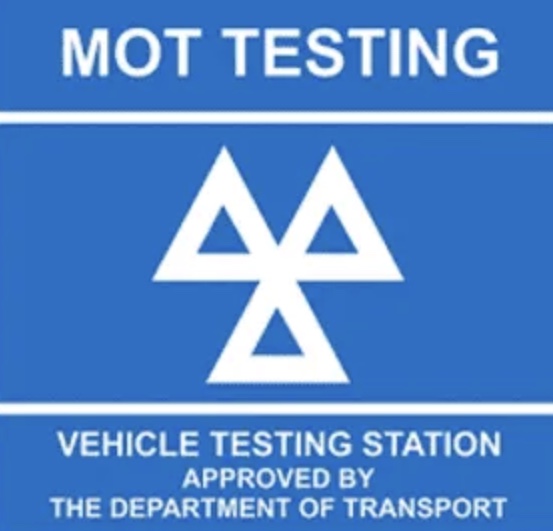
It’s recommended that MOTs are done within the month before your current MOT expires, and you’ll need to use an approved MOT test centre. How can you spot an approved test centre we hear you ask? Just look for places displaying the blue sign with three white triangles.
What’s checked during an MOT?
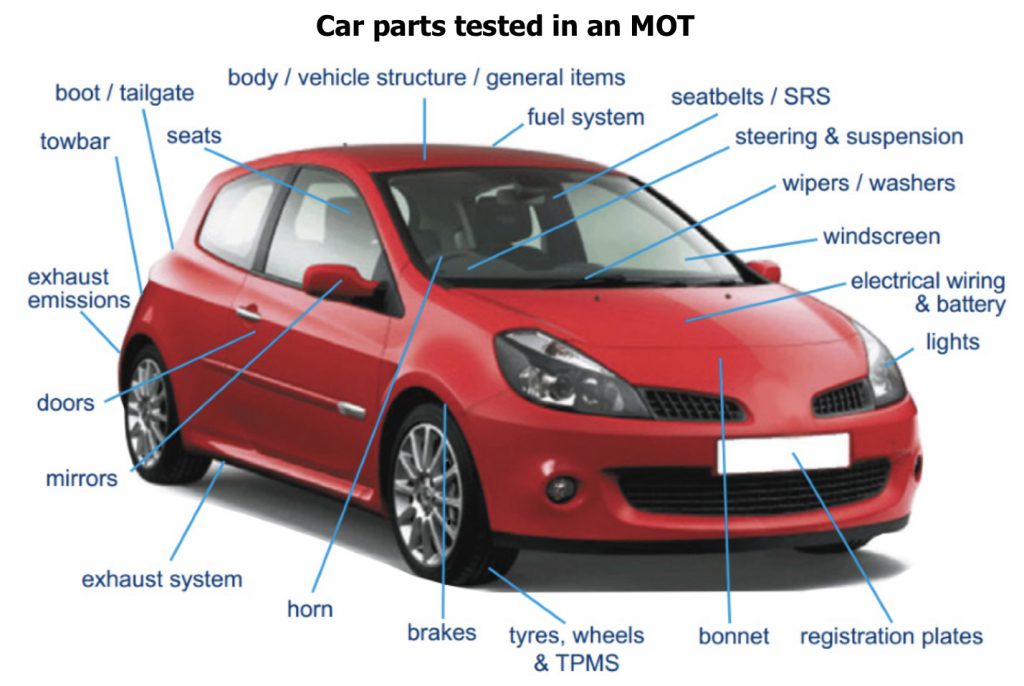
An MOT consists of testing important parts of your car to check they meet legal standards. It’s not the same as having your car serviced (so it doesn’t cover the engine, clutch or gearbox), and it doesn’t check the general mechanical condition of the car.
Here’s some of what’s checked during an MOT:
- Body structure
- Brakes
- Doors
- Electrics
- Exhaust
- Fuel system
- Lights
- Seats
- Steering
What happens if my car fails its MOT?
If a car fails its MOT, it’s deemed unroadworthy and it’s illegal to drive it.
You’ll receive a refusal of an MOT test certificate (VT30) detailing the faults. Any ‘dangerous’ faults listed on the VT30 certificate must be fixed and the car needs to pass a new MOT before being driven again. Driving a car with a failed MOT that has dangerous faults is illegal and can lead to fines and points, and renders your breakdown cover invalid with most rescue companies.
The only times you can drive are if you’re going to or from getting it repaired, going to another MOT test, or if the previous certificate is still valid and no dangerous faults were found.
If you feel that your car’s MOT result was unfair or a mistake, you can appeal a failed MOT decision.
What are the most common reasons for a failed MOT?
The most common reasons for a failed MOT are defective tyres, lights, suspension and brakes.
Do electric vehicles need an MOT?
Yes, electric vehicles need to have an MOT. New EVs need to have one within three years of when they were first registered.
Like with other cars, driving without a valid MOT also renders your breakdown cover invalid with most rescue companies and may affect your car’s insurance policy.
How much does an MOT cost?
The maximum amount an approved MOT test centre can charge for an MOT is £54.85, although the average cost is around £42.
If your car fails but is repaired and retested within ten days, the cost is often discounted.
Are any vehicles exempt from an MOT?
Yes, some vehicles don’t need an MOT. They are:
- Goods vehicles powered by electricity that were registered before March 2015.
- Tractors.
- Some historic ‘vintage’ or ‘classic’ vehicles built or registered over 40 years ago that haven’t undergone substantial changes (such as a new chassis, body, axis or engine).
If you believe your vehicle is exempt, you do still need to do one thing. Submit an MOT exemption form (V112).
Does the MOT certificate need to be displayed in my car?
No, your MOT certificate doesn’t need to be displayed in your car, nor are you required to have it with you while driving.
MOT records are stored digitally, allowing police to check your vehicle’s status electronically. It’s still worth keeping the paper certificate for your own records, just in case you need it if you decide to sell the car.
Does my car need an MOT if I don’t plan to drive it?
No, your car doesn’t need a valid MOT if you don’t plan to drive it. But, this only applies if it is stored off-road and you register it as SORN (Statutory Off-Road Notification) with the DVLA.
A SORN vehicle must be kept on private land. Don’t use or park a SORN vehicle on a public road, or you could face a £2,500 fine.
If you’re taking your car off the road, register it as SORN.