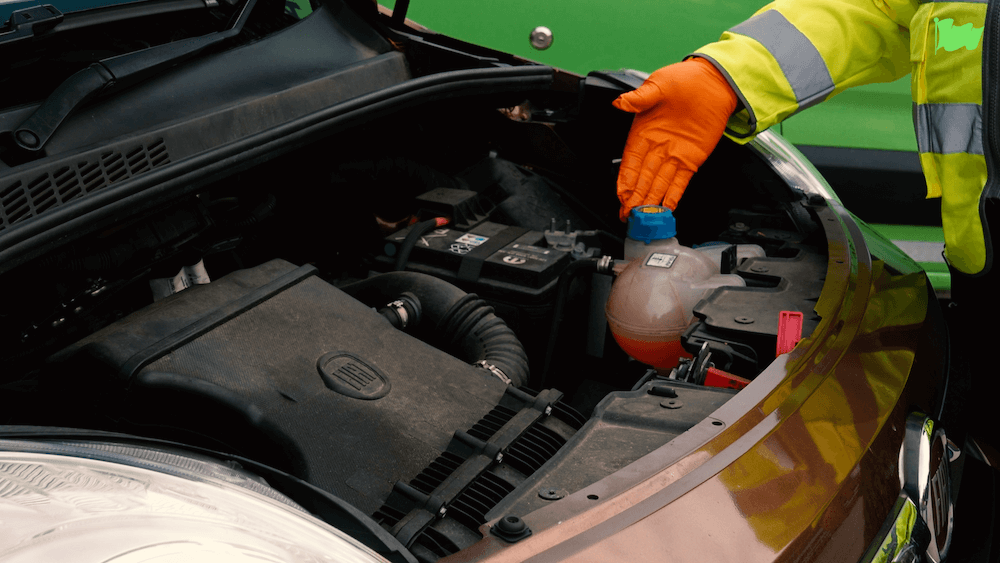
Checking your car’s coolant level is an important task to help keep your car healthy and on the road.
Our frequently asked questions, step-by step guide and expert video have everything you need to know about car coolant, how to check the level, and how to safely top it up.
What is car coolant and why does it matter?
A mixture of water and antifreeze, coolant circulates through the engine to maintain the right temperature. Antifreeze has a significantly higher boiling point than water, which means your car engine is kept cooler for longer.
Car coolant should not be confused with screen wash. While both may contain antifreeze agents and perform crucial jobs, they serve very different roles.
It’s important to check your car’s coolant level to prevent overheating or freezing, both of which can put your car out of action and leave you with a hefty repair bill.
How do I find the right coolant for my car?
Car coolant goes straight to the heart of your car’s engine, so it’s essential to use the right kind. The best way to do this is by checking your car’s user manual for details. The car’s OEM (original equipment manufacturer) code can also be found in the manual and can be used to identify the correct coolant by sharing the code with retailers. Always use the coolant that’s recommended by your car’s manufacturer.
Which colour coolant should I use?
Car coolant comes in three different colours for different types of cars and should never be mixed together. Green is usually recommended for older cars, orange is more suitable for newer cars, while red is made of hybrid acid and lasts longer than green.
However, colour isn’t a guarantee of the correct coolant. Using the wrong coolant could cause significant damage to your car. Therefore, consult your car’s manual for the correct coolant before topping it up.
Can I mix car coolants together?
At no time should differently coloured coolants be mixed with one another. They each have different chemical compounds and mixing them could form a sludge-like substance which will clog the radiator, heater and water pump. This could lead to overheating and corrosion, usually resulting in reduced protection and performance, and require expensive repairs.
How do I check my car’s coolant level?
What does the coolant reservoir look like, where can I find it, and how much coolant is the right amount? Relax, we’ve got all the key information (and more) covered in our step-by-step guide.
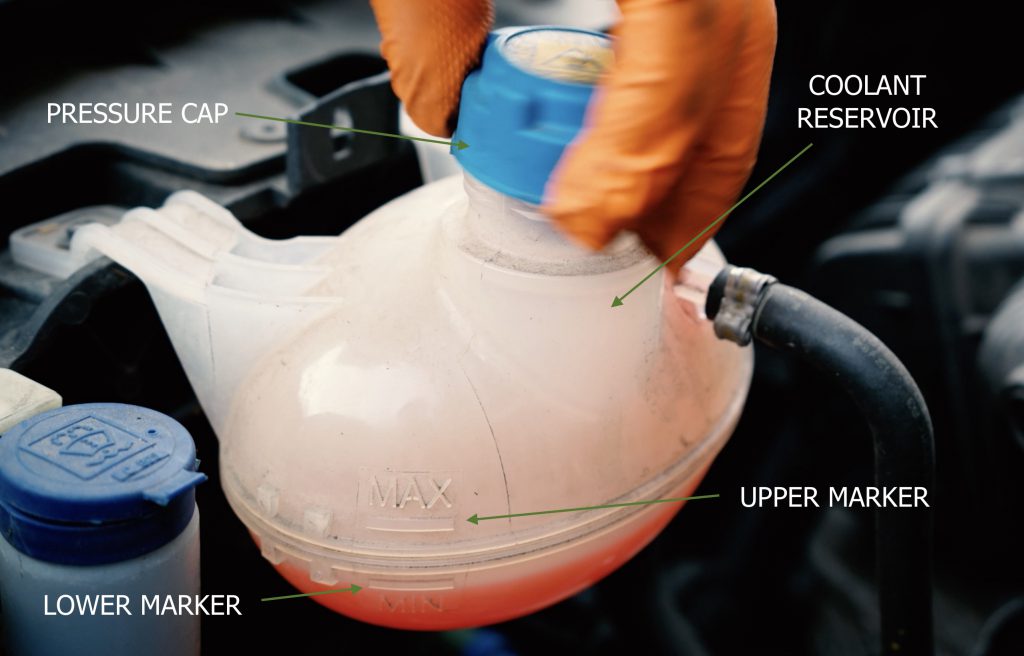
Step 1: Park your car on level ground and wait for the engine to cool
Make sure your car is on level ground and the engine is switched off. It’s important to leave your car for a while so it can cool down. Make sure the car is cold before you open the bonnet to avoid injury from hot parts and fluids.
Step 2: Locate your car’s coolant reservoir
A coolant reservoir is in the engine bay under a car’s bonnet. It’s a plastic, often see-through, tank which stores and preserves excess coolant. It stops air entering the cooling system and allows coolant to safely flow back to the radiator when required, which stop overheating.
Step 3: Checking your car’s coolant level
The ideal level for your coolant is between the ‘min’ and ‘max’ lines marked on the outside of the coolant reservoir. These markings indicate the minimum and maximum levels. If the coolant level is nearer the lower marking, it needs topping up. Avoid overfilling the reservoir, as excess fluid may escape and cause electrical damage and seriously endanger your car’s health. Coolant should never be above the upper ‘max’ marking.
How do I safely top up my car’s coolant?
Wearing a glove (or protect your hand with a cloth), slowly unscrew the coolant reservoir’s pressure cap. This gives you direct access to the coolant. If the level shown on the reservoir is low, carefully add some coolant until it reaches the required level (midway between minimum and maximum). Screw the pressure cap back on until it’s secure and clean up any spills. Test for leaks by running the engine and rechecking the reservoir. If you find that the coolant level keeps dropping, your car may have a leak and need looking at by an expert.
Video guide to checking your car’s coolant
Kema, our patrol technician (and all-round hero) is here to show you how to check and top-up car coolant, including his signature thumbs-up at the end.
What can I use if I run out of coolant?
In an emergency, if you run out of coolant you can use water as a short-term fix. You should then add the correct coolant as soon as possible. It’s important to note that using only water increases the risk of the fluid freezing in the engine, as it has a much higher freezing point than the other component of coolant (antifreeze).
What is the dilution ratio for car coolant?
The recommended water vs coolant dilution ratio is 50/50, which means equal parts concentrated antifreeze (and water. On average, this mixture provides protection from freezing to -37°C (-35°F) and efficient boiling protection.
When should I check my car’s coolant?
You should check your car’s coolant levels at least twice a year, in summer and in winter, especially before long journeys. It’s not only a low level of coolant that could be a problem, but it also shouldn’t be filled above the maximum limit either. These are the most common signs that indicate your car’s coolant needs checking:
- Rising temperature gauge: If the needle is in or near the red zone, it means your car is overheating and could be a direct result of the coolant running low.
- Dashboard warning light: Cars usually have a dashboard warning light to let you know the car is overheating and the coolant level needs to be checked.
- Broken heater: A low coolant level can trigger the cooling system to fail, resulting in broken heaters and radiators. If your car has a low cabin heat, this may be the cause.
- Leaks underneath your car: An engine leak can cause a puddle of bright coloured fluid under your car. This could be the result of coolant escaping from the reservoir.
- Steam coming from the bonnet: This is often a sign that your engine is overheating, possibly caused by a lack of coolant. Check the coolant level immediately (once it’s safe to do so).
What do I do if my engine overheats?
If your engine overheats, it’s very important act fast and follow these steps:
- Turn off the air conditioning: Air conditioning puts extra strain on the engine, so switching it off will immediately reduce the load.
- Set the heater to the maximum: This is the best way to draw the heat away from the engine and into the car cabin.
- Pull over somewhere safe: Park out of the way of other cars, where you can get out get out safely without endangering anyone. Never keep driving.
- Shut off the engine: Once the engine is off, it’ll stop any further damage or heat building up.
- Wait for the engine to cool down: This usually takes 15-30 minutes, but waiting for the engine to cool will reduce the chances of any burns or injury.
- Check coolant levels and leaks: See our step-by-step guide above for how to check for leaks and locate, assess and (if necessary) top-up your coolant so it’s between the ‘min’ and ‘max lines.
- Test the engine: If you can’t spot any leaks and the coolant level is now in the middle of ‘min’ and ‘max’, restart the engine. Monitor the temperature gauge – if it immediately rises again, get in touch with your breakdown provider.
What are signs that it’s time to replace (flush) my car’s coolant?
The most common signs that it may be time for a car coolant flush are:
- Frequently overheated engine: Your car’s engine is constantly showing signs of being overheated, either by steam blowing or indication on the gauge.
- Sweet syrup smell: If you’re detecting a sweet maple syrup smell, it may be coming from chemicals that have escaped from the engine. Check under your car for a leak as it may need repairing and the coolant replaced.
- Dashboard warning light: Watch out for your car’s coolant dashboard warning light, it will tell you if there’s an issue with the coolant.
- Sludgy or off-colour coolant: If your car’s coolant is like sludge or if the colour is different to normal, it could be time to replace it. Sludge can lead to clogging of the radiator, heater and water pump, which can lead to corrosion and damage to the engine.
How often does car coolant need replacing (flushing)?
Replacing (or flushing) coolant is a procedure that involves draining old coolant and topping it back up with new coolant. Time intervals may vary by model and age but, on average, car coolant needs replacing around every 30,000 to 50,000 miles or 3 to 5 years, whichever comes first.
Many modern vehicles use long-life coolant that can last up to twice as long. Be sure to check your car’s service history and owner’s manual for specific manufacturer intervals recommendations.
Can I flush (replace) my car’s coolant myself?
You can safely replace your car’s coolant by following these steps:
- Shut off the engine and wait for it to cool down: It’s essential you wait for the engine to cool down, as it will reduce the chance of any burns or injury.
- Drain the system: Drain your car’s cooling system by placing a container under the radiator and opening the drain valve (the petcock, usually located at the bottom of the radiator). This will allow any fluid to escape into the container.
- Add a flush solution: Pour a radiator flush solution along with an equal amount of water into your car’s coolant reservoir up to the ‘max’ line. The solution will help to clean your coolant reservoir.
- Run the engine with the heater on high: Do this for at least 10 minutes. This will make sure the fluid circulates around your car’s cooling system.
- Drain and rinse the system: Once the engine is cool, drain the cleaning solution entirely before rinsing the system. To rinse the system, fill it with water only until the fluids runs clear.
- Refill the cooling system: Fill the system up to midway between the ‘min’ and ‘max’ lines with an equal mix of the correct antifreeze and water.
Seasonal advice for car coolant levels
You should check your car’s coolant levels at least twice a year – in the summer and in the winter. This is because coolant works hard to keep your car engine at the right temperature all year round, from summer heatwaves to sub-zero conditions.
It’s advisable to check on your car’s coolant before long journeys, just in case it needs topping up (or lowering) before you set off. After all, it’s not just a low level that could be a problem; coolant shouldn’t be filled above the maximum limit either.
Do electric vehicles need car coolant?
Yes, electric vehicles (EVs) require coolant to regulate the temperature of the battery pack, electric motor and power electronics for optimal performance. They often use cooling systems (glycol-based) to prevent battery failure, overheating and reduced lifespan. Batteries generate significant heat and must be kept within 20°C to 40°C, so coolant is vital for this. Only use OEM (original equipment manufacturer) recommended fluids.
What are the warranty considerations for electric vehicle coolant?
EV coolant is generally considered a maintenance item rather than a warrantied part, with manufacturers requiring checks and changes at specific intervals (often around 60,000 to 100,000 miles) to keep warranties valid. Coolant top-ups and flushes are usually considered routine maintenance, but using incorrect coolant or failing to maintain proper levels can lead to cooling system failures and potentially void warranty claims.
Is car coolant safe for the environment?
No, car coolant is not safe for the environment and is considered a hazardous material because of the chemical elements of antifreeze. It contains ethylene glycol, which is highly toxic and dangerous to animals, aquatic life, and soil. Improperly disposed coolant can cause severe environmental damage, and used coolant may contain heavy metals (such as lead and cadmium) that increase its toxicity.
What are the correct disposal routes for used car coolant?
Spills or dumping of coolant can contaminate groundwater, rivers and lakes, causing ecological imbalances so it’s imperative that it’s disposed of correctly and safely. Store coolant sealed, clean spills immediately, and take used coolant to a hazardous waste facility, a local mechanic, or community recycling centres. Never pour coolant down a drain.
Is car coolant dangerous to humans and animals?
Yes, car coolant is highly dangerous to both humans and animals and can be fatal, even in small amounts, because antifreeze contains ethylene glycol. Its sweet smell and taste attract children and pets and just a few drops or a teaspoon can be lethal. That’s why leaks in garages and on pavements, driveways, etc, should be cleaned up immediately and containers be kept sealed and out of reach of children and animals.
How much does car coolant cost?
Regular car coolant generally costs between £5 to £10 per litre for the antifreeze alone (which you’ll need to mix equally with water), with 4 or 5L bottles costing around £20. Coolant for EVs is about 50% more expensive than regular because of their specific usage. A full coolant replacement (flush) for a regular car can cost up to £100 (for fluid and labour) if done professionally at a garage.
It’s recommended to check your owner’s manual to make sure you use the correct type of coolant for your vehicle.
For more information, check out Green Flag car maintenance advice, our frequently asked questions or contact us.
Other car maintenance blogs you may find useful:
How to replace your windscreen wipers
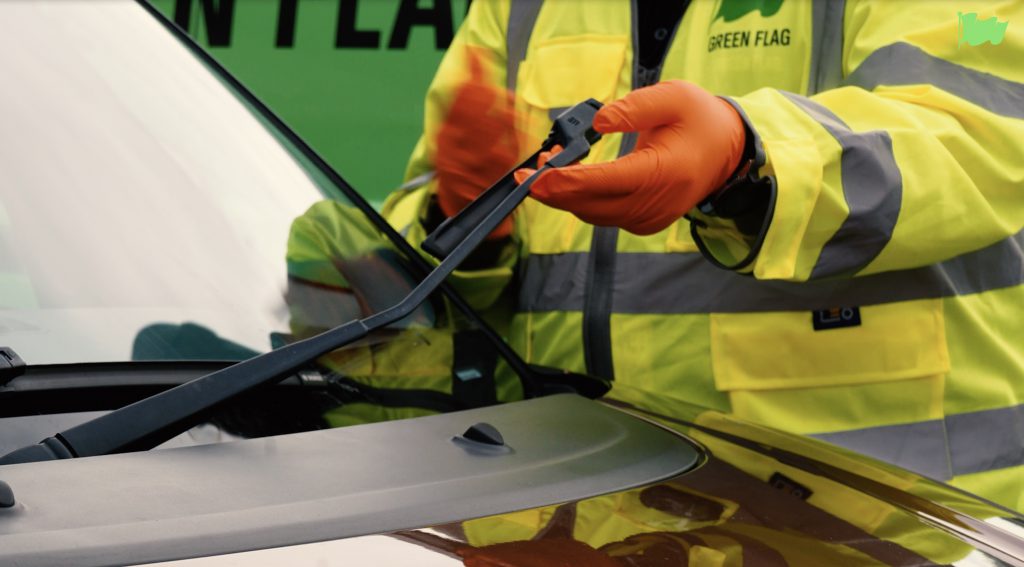
Being able to change your car’s windscreen wiper blades is a vital car maintenance skill. Follow our step-by step guide and a handy video showing how our experts do it.